Photograph courtesy of Ben Wilde
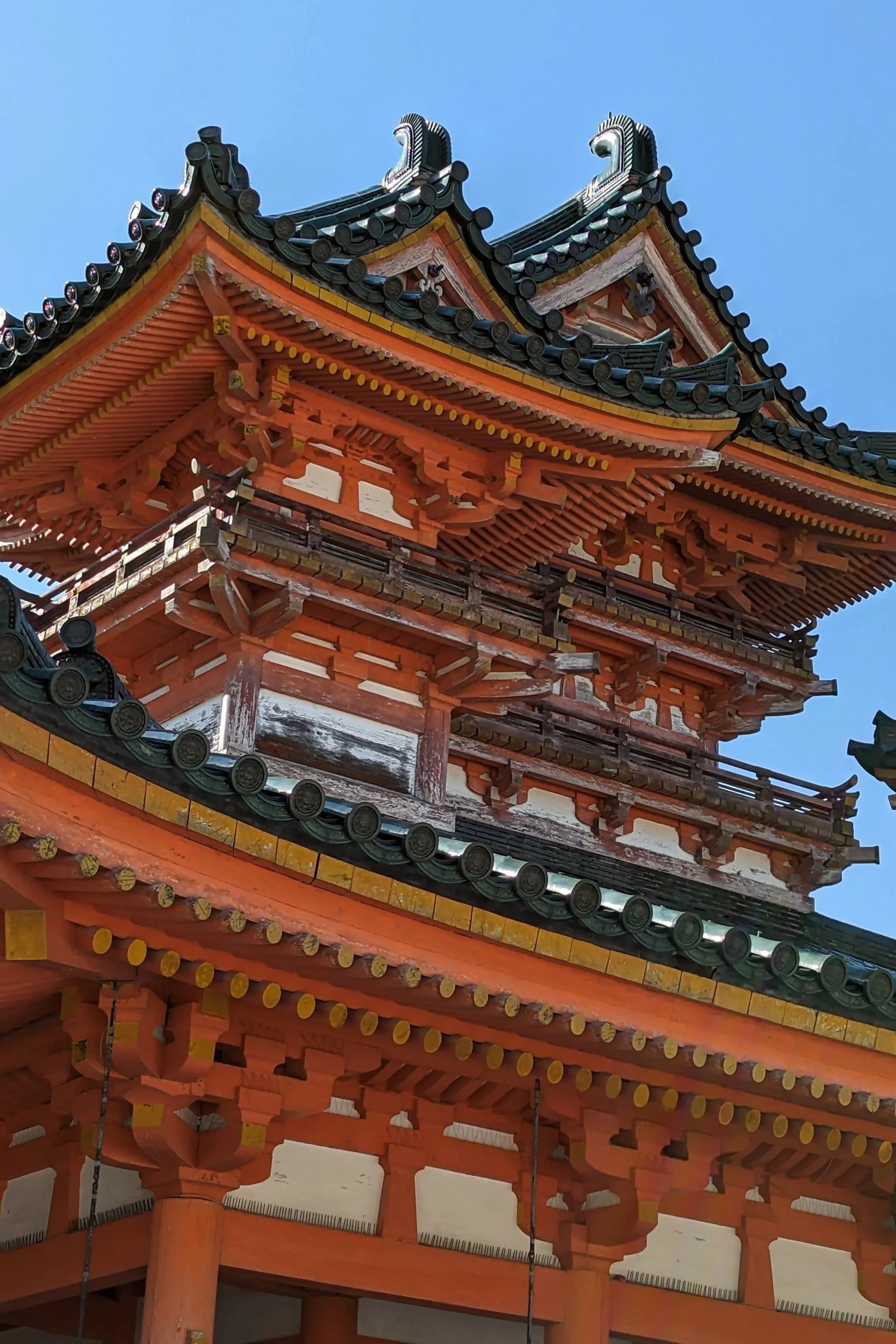
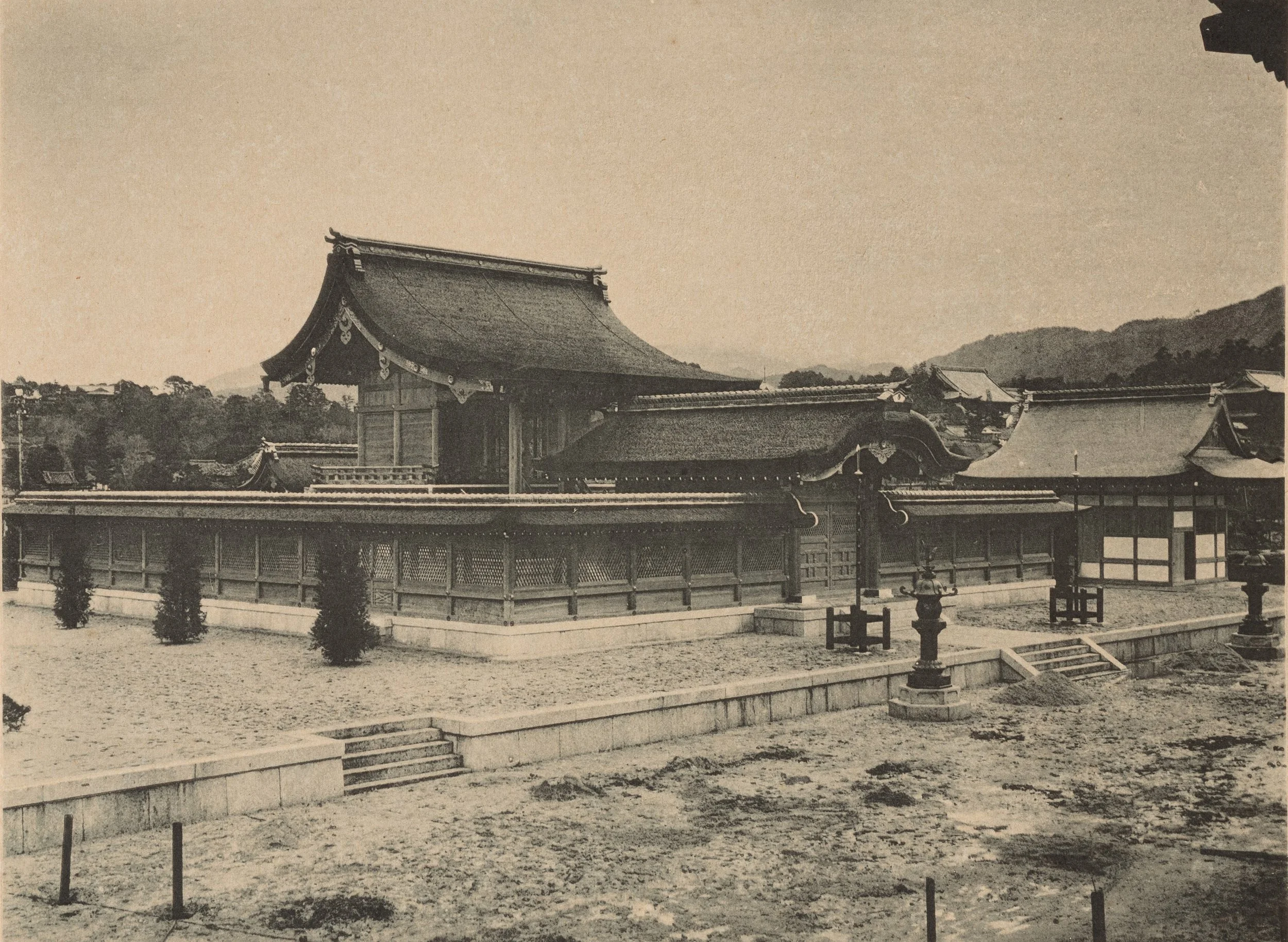
Heian Jingū, White Tiger Pavilion
Heian Jingū and Jidai Matsuri
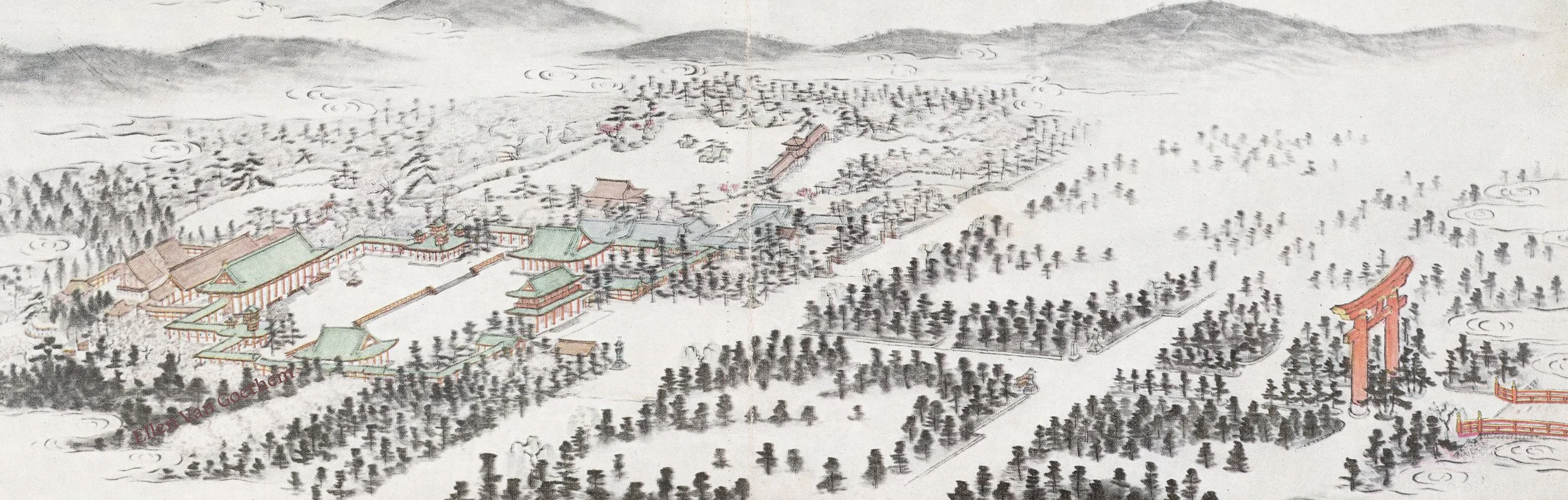
In 1895, a new Shinto shrine was festively inaugurated in Kyoto; merging various architectural styles, Heian Jingū was intended as a testimony to Kyoto’s bygone days as the nation’s capital. Yet in spite of its grandeur, the shrine’s founding is usually explained in very simple terms. It was established to commemorate the 1100th anniversary of the move to the Heian capital and was, therefore, dedicated to the city’s founder, Kanmu Tennō (r.781–806), and modeled after part of his palace compound.
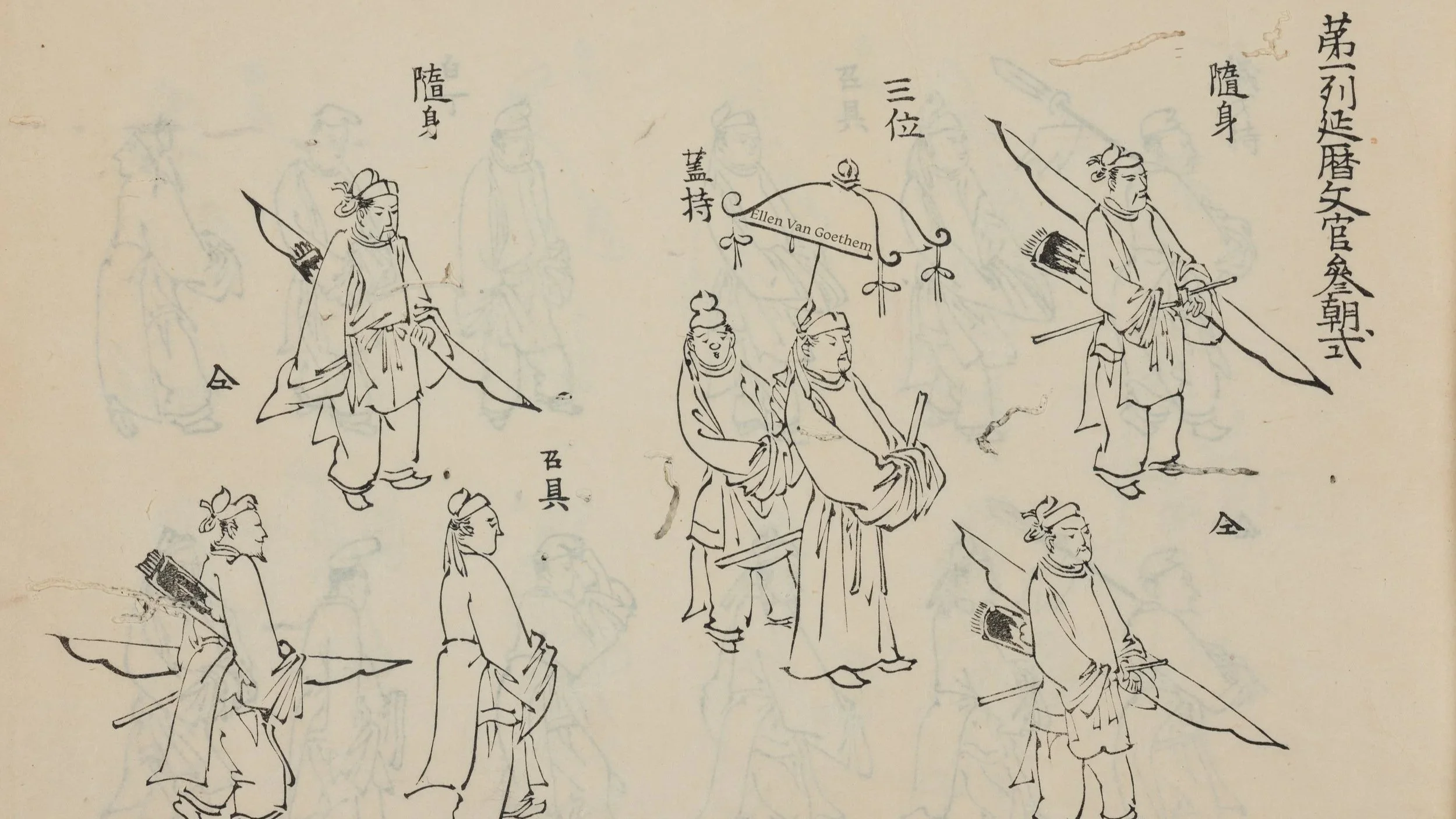
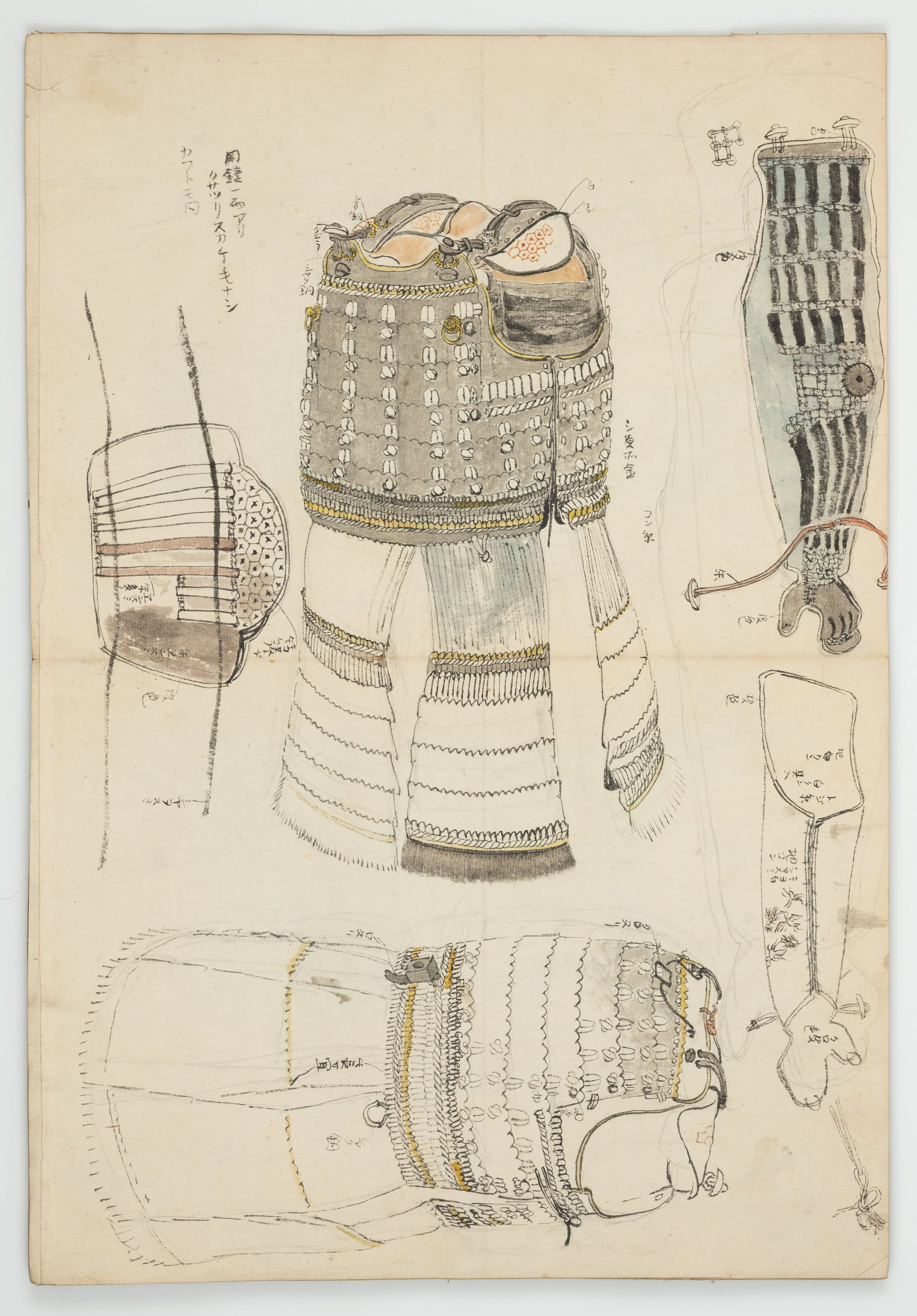
Jidai Matsuri or the Festival of the Ages is presented as having a similarly uncomplicated beginning. It was created by the people of Kyoto to celebrate their city's history through a chronological parade, one that meticulously displays the changing styles of dress and paraphernalia used from the capital's inception in the late eighth century until the late 1800s.
A closer look at both founding stories, however, reveals a much more complex narrative that illustrates how carefully laid out plans can take a sudden turn due to unforeseen events or last-minute interventions. As such, this project touches not only on doctrinal issues such as the unprecedented deification of past emperors, but also on material aspects such as the Meiji government’s creation of a blueprint for newly erected shrines. Moreover, tracing Heian jingū’s founding story helps explain why a major imperial shrine (kanpei taisha) in the emerging Japanese nation state was so replete with Chinese symbolism and why in later years at least one of its designers expressed great disappointment at the end result.
The shrine and the procession perfectly demonstrate how last-minute decisions and unforeseen circumstances can crystallize into permanent fixtures of a city’s—and ultimately also a nation's—cultural heritage. Furthermore, they illustrate the way in which the past is not a static entity, but is instead continuously re-imagined and reconstructed by subsequent generations. Moreover, it is clear that from their inception until the present day, Heian jingū and Jidai Matsuri themselves have also been the product of this complex, sophisticated, and continuous process of transformation and (re)invention, guided by the historical, social, and ideological contexts within which they evolved.
Jidai Matsuri
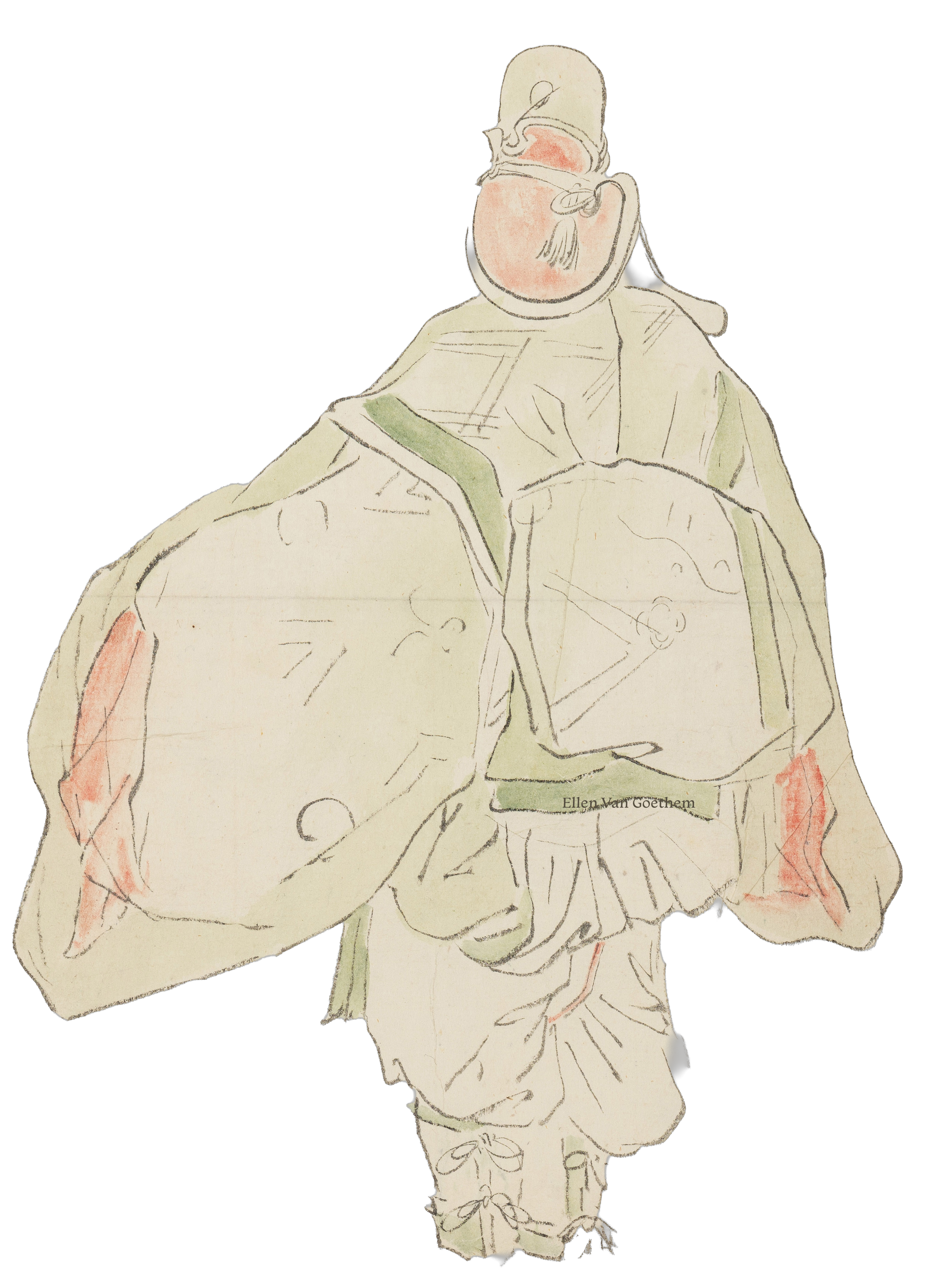
Late eighth-century officials at a court audience
Heian jingū jidai matsuri gyōretsu zufu (1895)
Personal collection

“It had been intended to celebrate in spring the eleven hundredth anniversary of the foundation of Kyôto; but the outbreak of pestilence caused postponement of the festival to the autumn, and the celebration began on the 15th of the tenth month. Little festival medals of nickel, made to be pinned to the breast, like military decorations, were for sale at half a yen each. These medals entitled the wearers to special cheap fares on all the Japanese railroad and steamship lines, and to other desirable privileges, such as free entrance to wonderful palaces, gardens, and temples. On the 23[r]d of October I found myself in possession of a medal, and journeying to Kyôto by the first morning train, which was overcrowded with people eager to witness the great historical processions announced for the 24th and 25th.”

A 1895 Festival Medal

Miyake Gogyō’s Sketches for Samurai Armor Worn during Jidai Matsuri in 1895
The Main Sanctuary (honden) in 1895
Publications
‘Heian Jingū: Monument or Shintō Shrine?,’ Journal of Religion in Japan 7:1 (2018), pp. 1–26.
‘Jidai matsuri no kigen: Wazawai tenjite fuku to nasu’ 時代祭の起源―禍転じて福となす [The Origin of Jidai Matsuri: Turning Misfortune into Luck], Tosho 図書 (October 2023), pp. 22–24.
Conference Presentations and Invited Lectures
February 20, 2026
“Options for the Past: Monuments, Shrines, and Historical Parks”
University of Copenhagen
January 23, 2026
“Nineteenth-Century Images of the Past: The Creation of Heian Jingū and the Festival of the Ages”
CIEE Kyoto Seminar Series
September 26, 2025
“Heian Jingū and Jidai Matsuri: Modern Reimaginings of the Ancient Past”
University of Naples l’Orientale, Department of Asian, African, and Mediterranean Studies (DAAM)
December 7, 2024
“(Re)Imaginings of the Heian, Nara, and Shuri Palaces in the Late Nineteenth and Early Twentieth Centuries”
The International Research Center for Japanese Studies (Nichibunken)
May 24, 2024
“Vanished and Resurrected: The Reconstruction of the Heian, Shuri, and Nara Palaces in the Modern Era”
University of Naples
October 30, 2023
“Revival and Reconstruction: From Ritual Space to Monument and Back Again”
University of California, Santa Barbara
July 8, 2022
“Green-Glazed Roof Tiles and Vermilion Pillars: The Legacy of the 1895 Daigokuden Reconstruction in Kyoto”
Workshop “Absence, Presence, and Materiality: Refiguring Japanese Religious Art and Culture” organized by Yen-Yi Chan
Sainsbury Institute
July 6, 2022
“Jidai Matsuri: The ‘Festival of the Ages’ That Almost Never Was”
Q-AOS Brown Bag Seminar Kyushu University
October 18, 2021
Panelist 「なぜ、首里城復元なのか」[Why Reconstruct Shuri Castle?]
Kyushu University Asia Week 2021, organized by Toshiyuki Kono, Honorary President of ICOMOS
March 5, 2021
Moderator of the Plenary Session “A Global Heritage Site” with Toshiyuki Kono (Honorary President of ICOMOS) and Simon Kaner (Sainsbury Institute/University of East Anglia)
Workshop “Heritage from the Margins? Shuri Castle and the Politics of Memory,” Kyushu University Border Studies
December 13, 2019
“Imitation, Deification, and Identity: Heian Jingū’s Many Facades”
Tohoku University, Department of Global Japanese Studies
February 15, 2019
“The Others Within: Architecture, Activism, and Advertising at Heian Jingū”
Workshop “Thank God We’re Not Like Them”: The Global Dimensions of Religious Othering, UCSB
February 11, 2019
“Commemoration and Deification: The Creation of Heian Jingū”
UCSB, East Asia Center
November 8, 2018
“Monument, Shrine, Power Spot: Heian Jingū’s Multi-Layered Signification”
Columbia University, Donald Keene Center of Japanese Culture
October 30, 2017
“Heian Jingū: Shinto Shrine and/or Yellow Dragon of the Center”
Kyushu University, Interdisciplinary Colloquium
March 2, 2017
“From Scale Model to Shrine: The Creation of Heian Jingū”
UCLA, Asian Languages & Cultures Department
Funding
This research is funded by
JSPS / KAKENHI Grant-in-Aid for Scientific Research (C) 基盤硏究 C (2024–2029)
‘Heian Jingū and Jidai Matsuri: Changing Meanings and Perceptions from Their Creation to the Present’ (grant no. 24K03398).QR プログラム つばさプロジェクト [Kyushu University Jump Research Program, Tsubasa Project] (2017–2020)
‘Heian Jingu: The Creation of a New Shrine’
Project collaborators: Yūki Katō (Kyushu University) and Alice Tseng (Boston University)出産・育児復帰者支援 [Support for Women Returning from Maternity and Parental Leave, Kyushu University] (2017–2018)
‘Guardians of Kyoto: Shinto Shrines as Manifestations of the Directional Deities’出産・育児復帰者支援 [Support for Women Returning from Maternity and Parental Leave, Kyushu University] (2015–2016)
‘Fengshui-related Practices in Shinto Shrines’
Related Projects
Reiterations of the Past: Reconstructions, Practices, and Places
City and Monument: Urban Planning and Memory in Japan (PI: Timon Screech, Nichibunken)
‘Destroyed’, ‘Forgotten’, and ‘Reappearing’ Heritage in Japan (with Daniel Milne, Jens Sejrup, Alice Tseng, Christian Tagsold, and Ran Zwigenberg)
Related Event
International Symposium: Emperor and Shrine: Commemoration, Ideology, and Identity