Ellen’s History Lab
I offer a variety of graduate-level courses covering premodern Japanese history, archaeology, and material culture. Central to my teaching is an engagement with primary sources and where possible, I try to move beyond the classroom to incorporate on-site study at archaeological sites, museums, shrines, and temples.
I welcome applications from motivated MA and PhD students eager to conduct research in Japanese history.
Prospective MA students should possess a foundational background in Japanese history and a commitment to developing their linguistic and methodological skills. They should possess a functional command of modern Japanese; a proficiency level of JLPT N3 or higher is strongly recommended to successfully engage with secondary scholarship. Based on their specific research focus, they should also possess at least basic knowledge of Literary Sinitic (kanbun) and/or Classical Japanese (kobun).
Prospective PhD students must possess advanced Japanese-language proficiency (JLPT N2 or higher). They should also be ready to work directly with primary sources, including those written in Literary Sinitic (kanbun) or Classical Japanese (bungo), as dictated by their specific research focus.
PhD Dissertation Mentorship
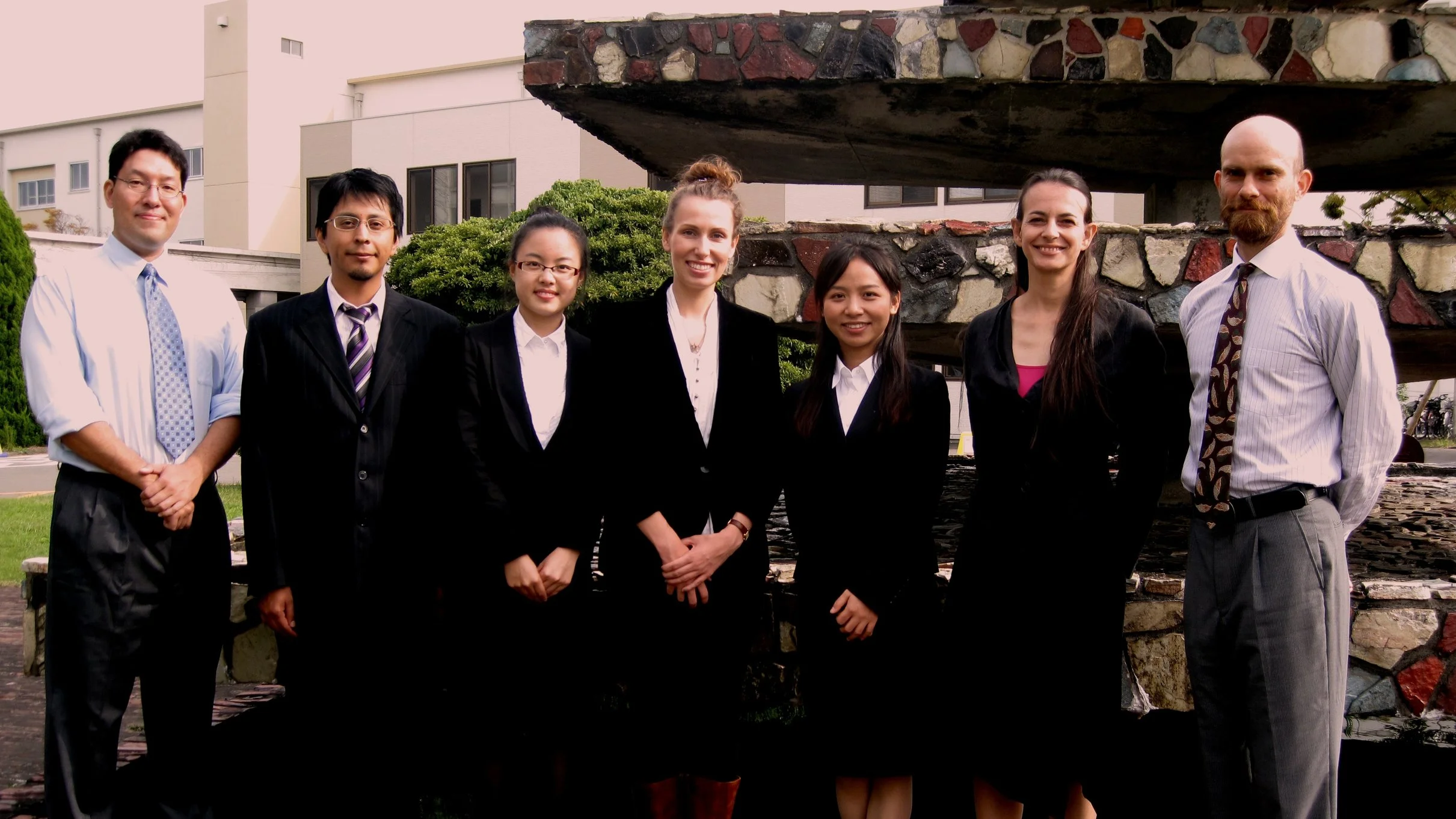
With former colleagues Jeff Kurashige and Carey Benom,
alongside the first IMAP cohort (2011)
A. E., “Assembling Dazaifu: Society, Politics, and Space in a Gate-Front Town during the Bakumatsu Period” (幕末太宰府の生成変化に関する基礎的研究)
T. K., “The History of Budō 武道: Its Ethical, Religious, Intellectual and Aesthetic Evaluation in Transition”
J. R., “Eiketsu 英傑: The Making of Bakumatsu Heroes”
MA Thesis Mentorship
Ongoing
Z. J., “Vessel of Vestiges: Investigating Kamuiyaki Ware within New Frameworks of Ryukyu History”
2025
D. W., “Contextualizing the Phaeton Incident: Incursions into Japanese Waters in the Late Edo Period”
2024
T. C., “Timeless Tenshu: Constructing Castle Spaces and Historical Narratives”
R. K., “The Reception and Spread of Chinese Fengshui: A Case Study of Daishōgun Hachi Shrine and Daishōgun Belief”
2023
K. S., “Beyond the Veil: Gender, Morality, and Identity through Women's Head- and Face-Covering Practices in Premodern Japan”
B. W., “Symbiotic Propaganda: Suematsu Kenchō and The Risen Sun”
2022
B. Y. Y. C, “Beyond the Academy: Sinitic Practices of Court Women in the Early Heian Period”
D. F., “Salt from the Tides: The Economic History of the Yugeshima Maritime Estate in the Thirteenth Century”
L. R., “Miyajidake Kofun: The Making of a Sacred Place in Seventh-Century Japan”
2021
A. E., “Beyond the Gate: A Shipping Agent in the Social Space of Nineteenth-Century Dazaifu”
J. R., “Arrest and Development: Perpetual Adolescence and Japanese Detective Fiction”
R. Z., “Gairaigo and COVID-19: How a Pandemic Affected the Use of Modern Loanwords in Japanese”
2020
J. A., “The Racial Ideology of Naisen Yūwa: (Dis)harmony between Japanese and Koreans in the Imperial Metropole in the 1920s and ’30s”
B. A. W., “Gatekeepers of The Way of Tea: The Voices that Defined the Japanese Tea Ceremony”
2019
N. S., “The Hollowed Stone: A Critical Look at the Life of Tsukushi no Iwai during the Expansion of the Yamato State”
G. S., “Japan’s Early Private Traders: The Lives and Activities of Overseas Merchants, ca. 800–1126”
H. Y., “The Movement and Construction of Daianji, ca. 639–752”
2017
W. Y., “Money, Power, and Authority: Go-Kashiwabara's Enthronement Ceremony in 1521”
S. S. G., “Howl as a Tengu in Miyazaki Hayao’s Howl’s Moving Castle”
2016
Y. Z., “The Idealized Monk: A Study of Ganjin’s Earliest Hagiographies”
M. J., “Three Waves of Scholarship: Changing Perspectives on Chōgen’s Journeys to China”
M. C. M., “Educating Hakatakko 博多っ子: Language Planning, Dialect and Identity in Hakata Elementary School”
2015
T. L., “English Influences on Japanese: Gairaigo and Wasei Eigo”
Y. P., “Water in Eighth-Century Japanese Gardens”
2014
P. C., “Hakata Gion Yamakasa: A Tradition Adapting to the Times”
X. H., “Portrayals of Oda Nobunaga from the Late Sixteenth to the Nineteenth Century 時代にかけて変化した織田信長の人物像-16~19世紀を中心に”
2013
Y. L., “Writings on Onmyōdō: An Analysis of Hoki Naiden, Volume 1”
Selected List of Courses Taught
Japan: A History to 1600
(Re)Constructing Japanese History: Archaeology, Text, Image, Object
Rethinking (Japanese) History
State and Authority in Ancient Japan
Nara History and Archaeology
History and Archaeology of Tōdaiji Temple
The Long Seventh Century
The Early Archipelago
From Jōmon to Heian: (Why) Does It Matter Today?
Trade, Diplomacy, and Exchange in Premodern East Asia
Introduction to Kanbun
Introduction to Bungo
Japanese Humanities Research in Situ
Experiencing Kyushu History and Culture in Situ
Research and Professional Development
Research, Readings, and Methods
History and Classroom Technology
History and Historiography
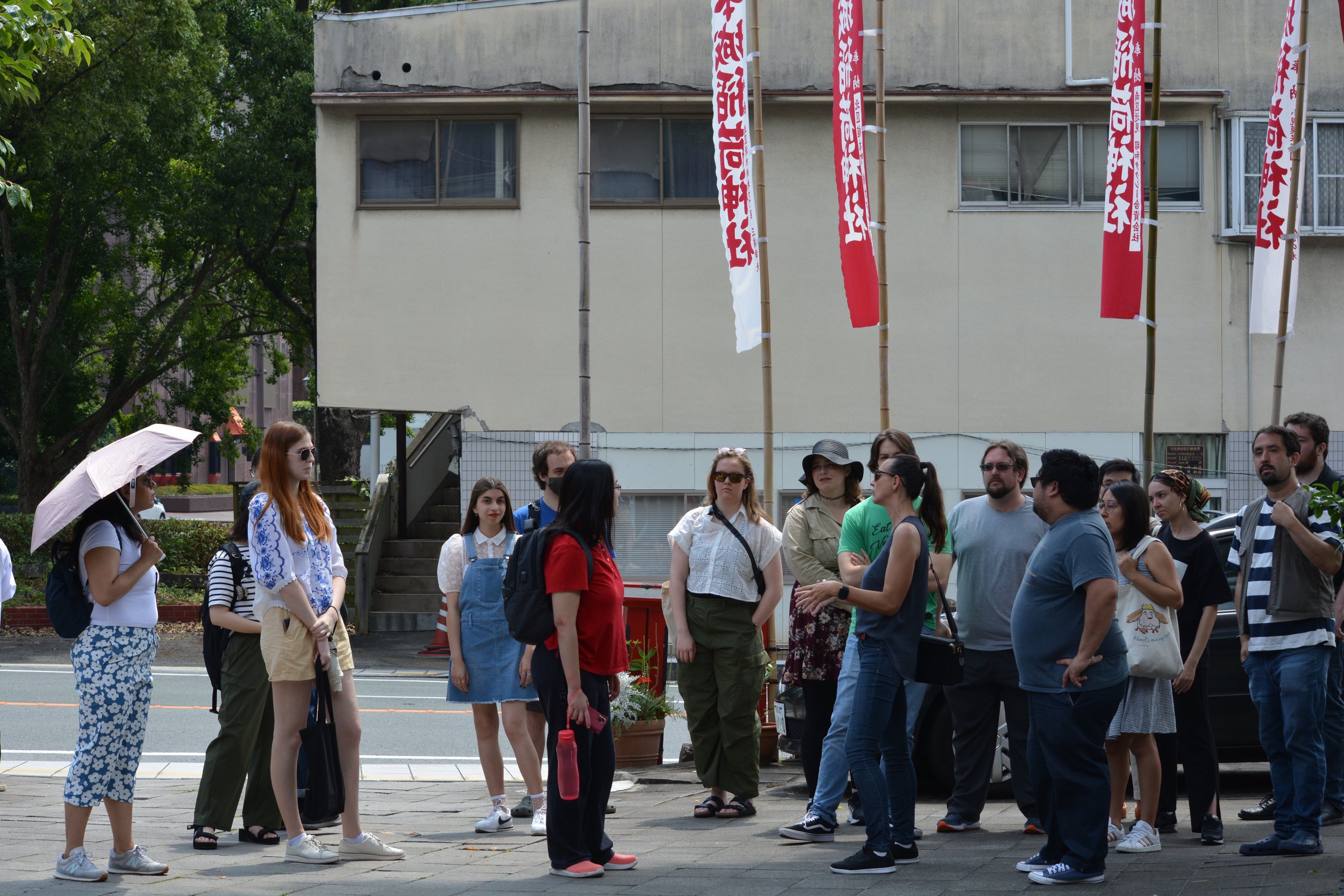
With students at Kumamotojō Inari Shrine
As part of the ‘Reiterations of the Past: Reconstructions, Practices, and Places’ project I also organized several graduate-level courses with contributions by prominent scholars worldwide.