Heian Jingū and Jidai Matsuri
To the east of Kyoto’s Kamo river stands Heian Jingū, a Shinto shrine founded in 1895. With its whitewashed walls, vermilion red pillars, and elaborate roofs covered with green-glazed tiles, the architecture is meant to replicate that of eighth-century government buildings.
The Jidai Matsuri or Festival of the Ages, an annual procession that showcases major historical figures dressed in period-appropriate garb, has been associated with the shrine since its inception.
Both the shrine and the procession provide ideal case studies for understanding how some monuments and events are created at the spur of the moment but soon become a fixture in the collective memory and cultural landscape of a society. They also show how the past is continuously re-imagined by later generations.
Site Divination in Premodern East Asia
Site divination is part of the much larger category of beliefs and practices known as geomancy or fengshui. It originates in ancient China where the first written evidence of site divination appeared in the Book of Burial (4th–5th c. CE). Here, mention is already made of four divine beasts (the Vermilion Bird, the Black Turtle-Snake, the Azure Dragon, and the White Tiger) and the necessity of having the landscape conform to these beasts in order to invite auspiciousness.
What this and other early writings fail to specify, however, is precisely which landscape features correspond to each of the beasts. It is only centuries later that this starts to become clear; moreover, there was not just one model to divine the ideal landscape.
The Nagaoka Capital
The Nagaoka capital was constructed in 784 by order of Kanmu Tennō (r. 781–806). However, after merely a decade, he abandoned the city mid-construction and relocated to what is now Kyoto.
Due to lacunae in the historical records, the short period during which the Nagaoka capital was in use, and a lack of physical evidence for its existence, Nagaoka was soon described as having been a phantom capital. This image was not rectified until the mid-twentieth century when excavations finally started to reveal that the city was much more meticulously planned and executed than had been assumed.
Ink-Inscribed Wooden Tablets
Rather than the delicate paper that would later become synonymous with Japanese calligraphy, wooden tablets served as the primary and most durable writing medium for administrative records, tax tallies, and other forms of correspondence in ancient Japan.
While a small number of ink-inscribed wooden tablets had been carefully preserved for centuries in imperial repositories, the vast majority was not discovered until the second half of the twentieth century when thousands started to turn up in archaeological excavations.
As a result, our understanding of various aspects of ancient government, economy, and society has changed and we have been allowed glimpses into mundane practicalities and daily life.
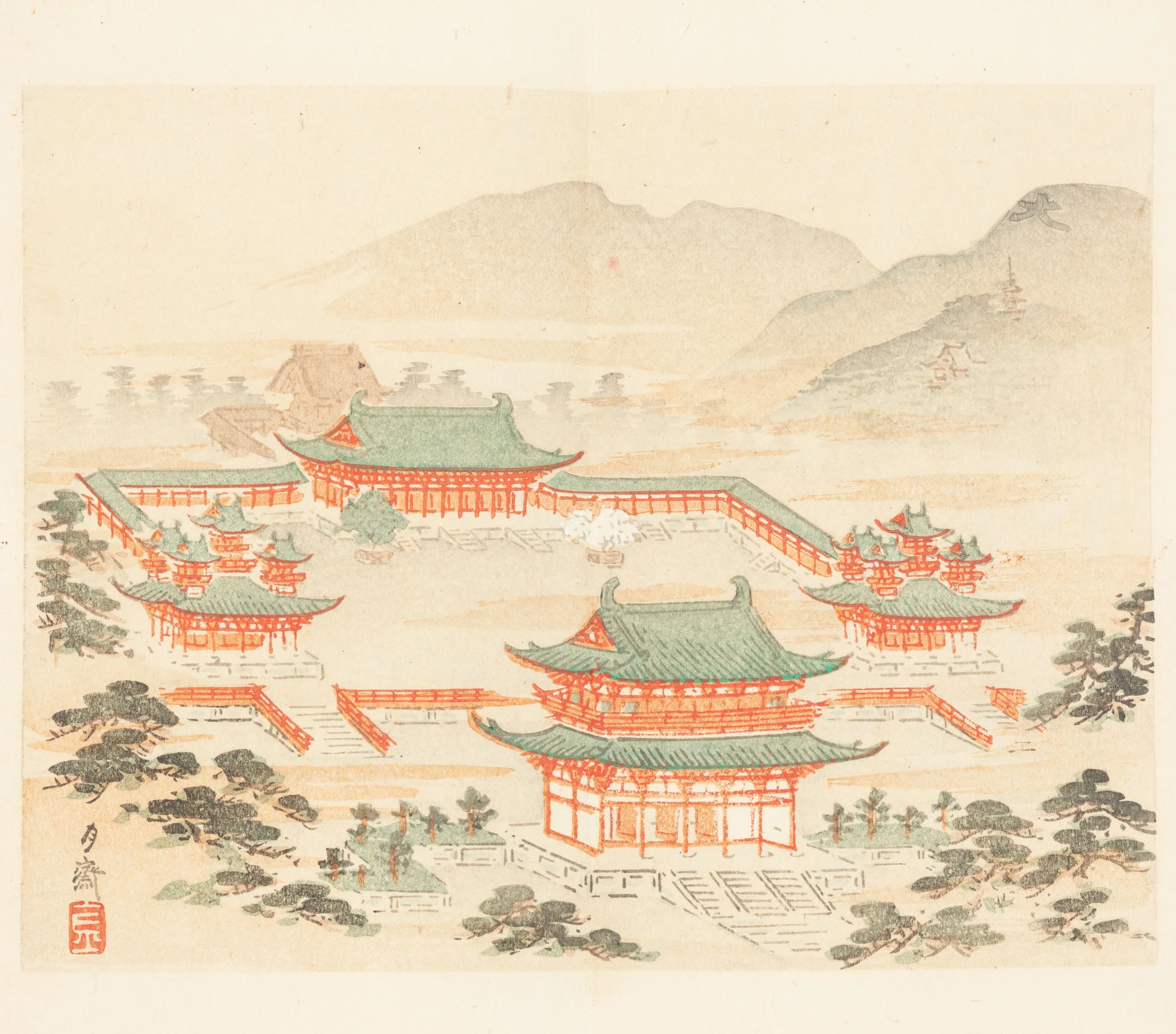
Heian Jingū in Kyōto meisho annai zen (1895)
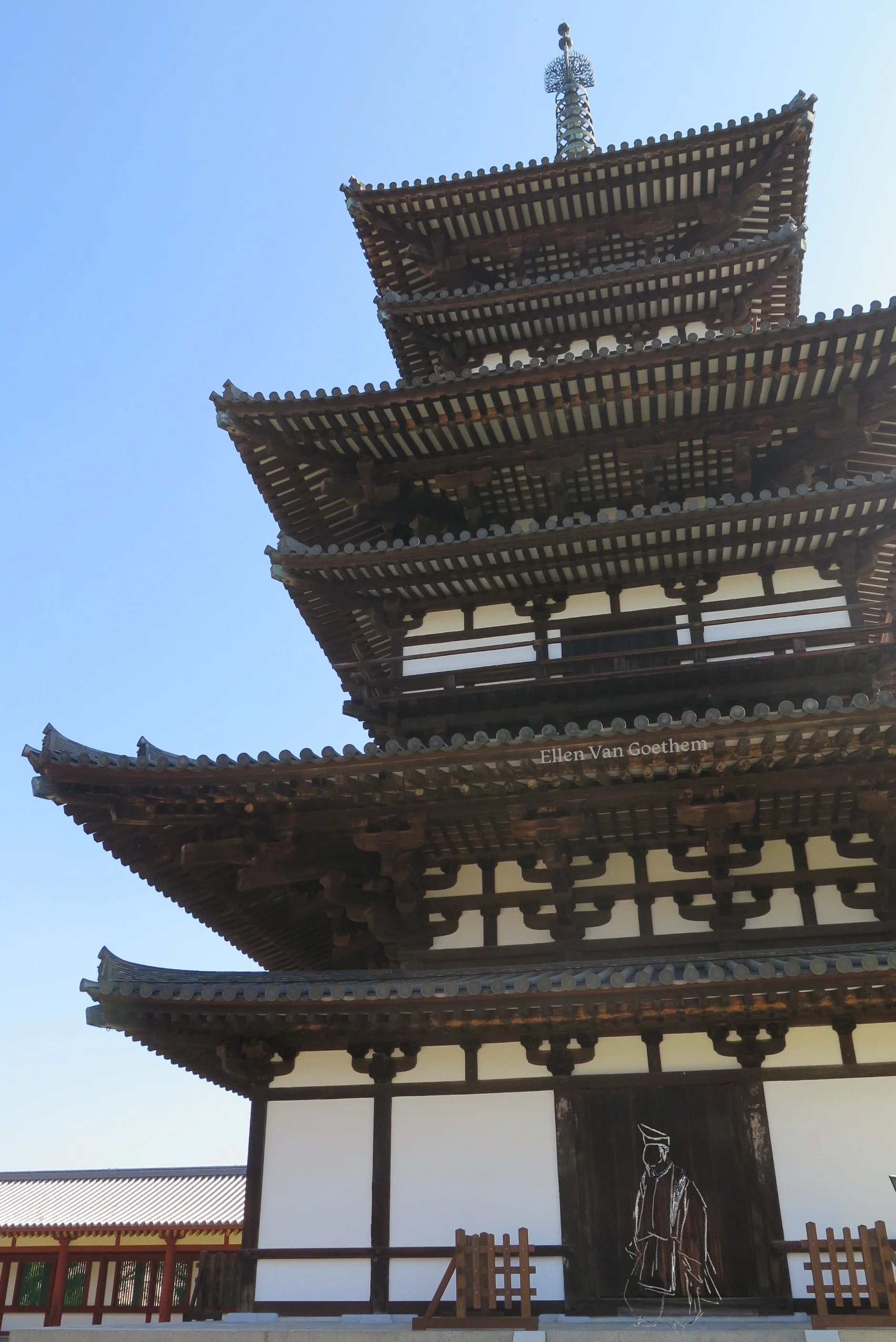
East Pagoda at Yakushiji, Nara
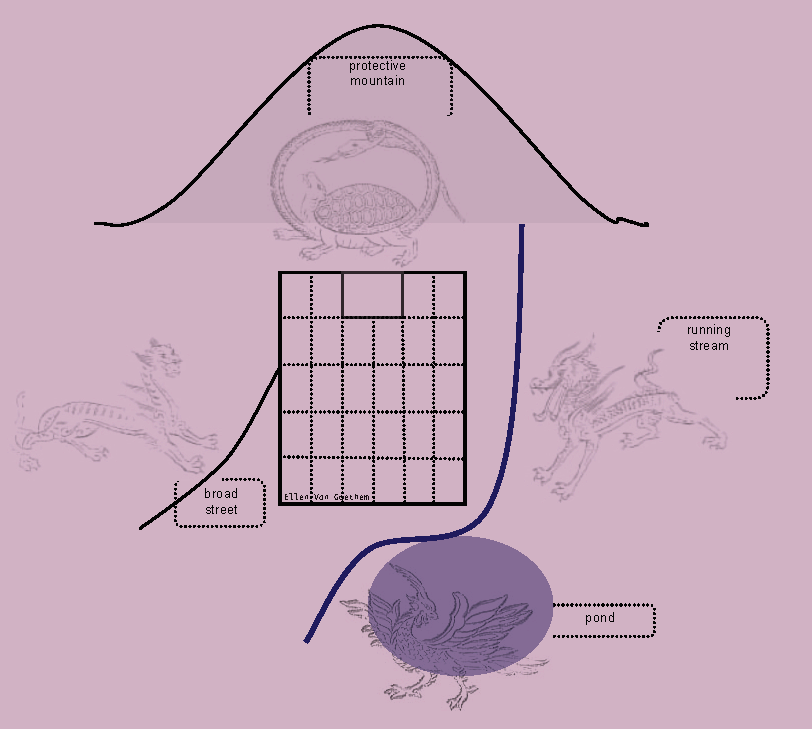
The Sakuteiki Model of Site Divination
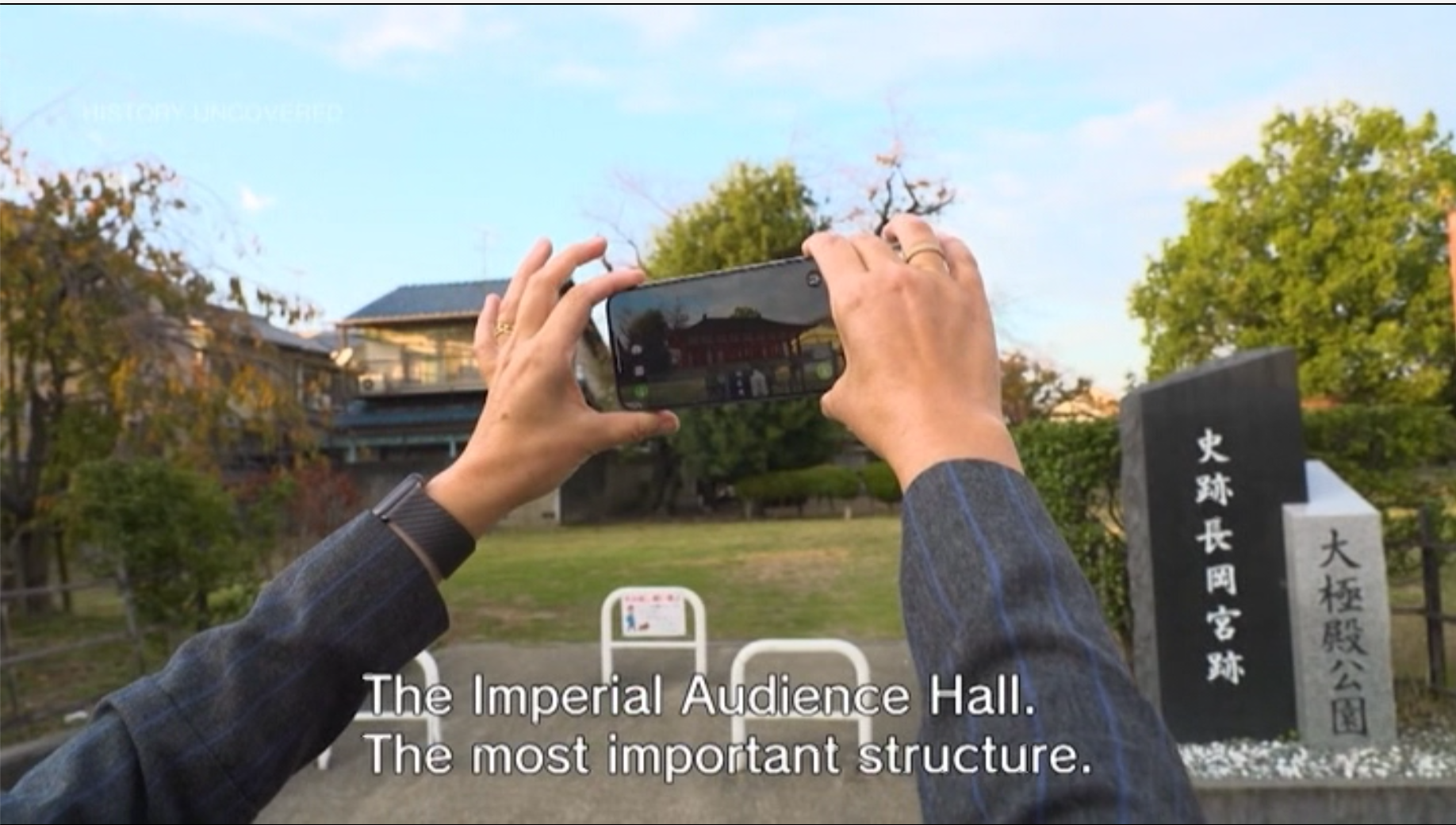
Using the AR Nagaokakyū app at the Nagaoka palace site for NHK World in 2025
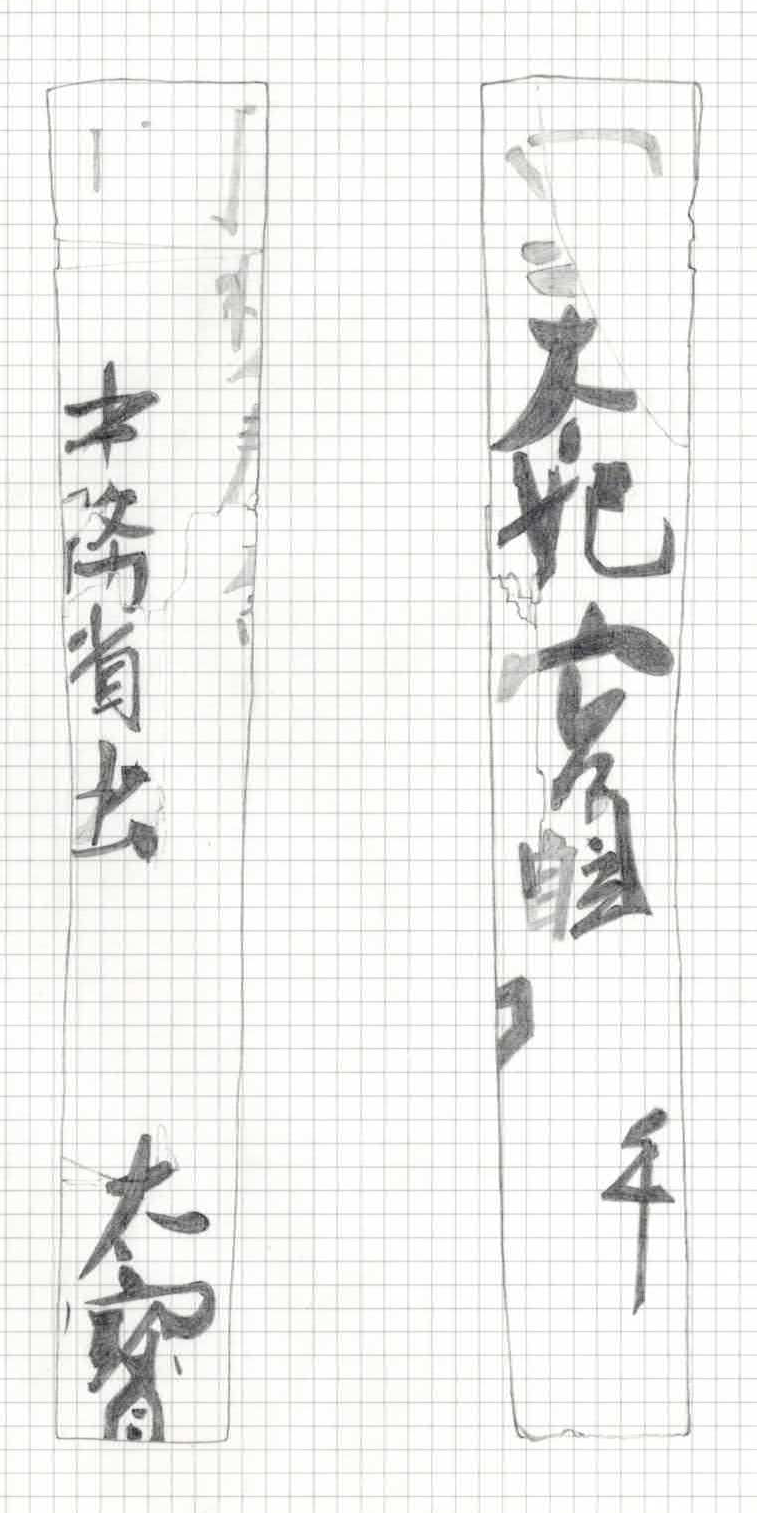
Sketch of an Eighth-Century Inscribed Wooden Tablet
Construction Workers and Artisans in Ancient Japan
A handful of eighth-century buildings still dot the Japanese landscape. They are typically found in Buddhist temples in the Kansai area and their architecture has attracted considerable attention.
Despite the wealth of available sources, however, the workforce behind the construction, outfitting, and upkeep of these—and many other, no longer existing—eighth-century structures has been studied far less.