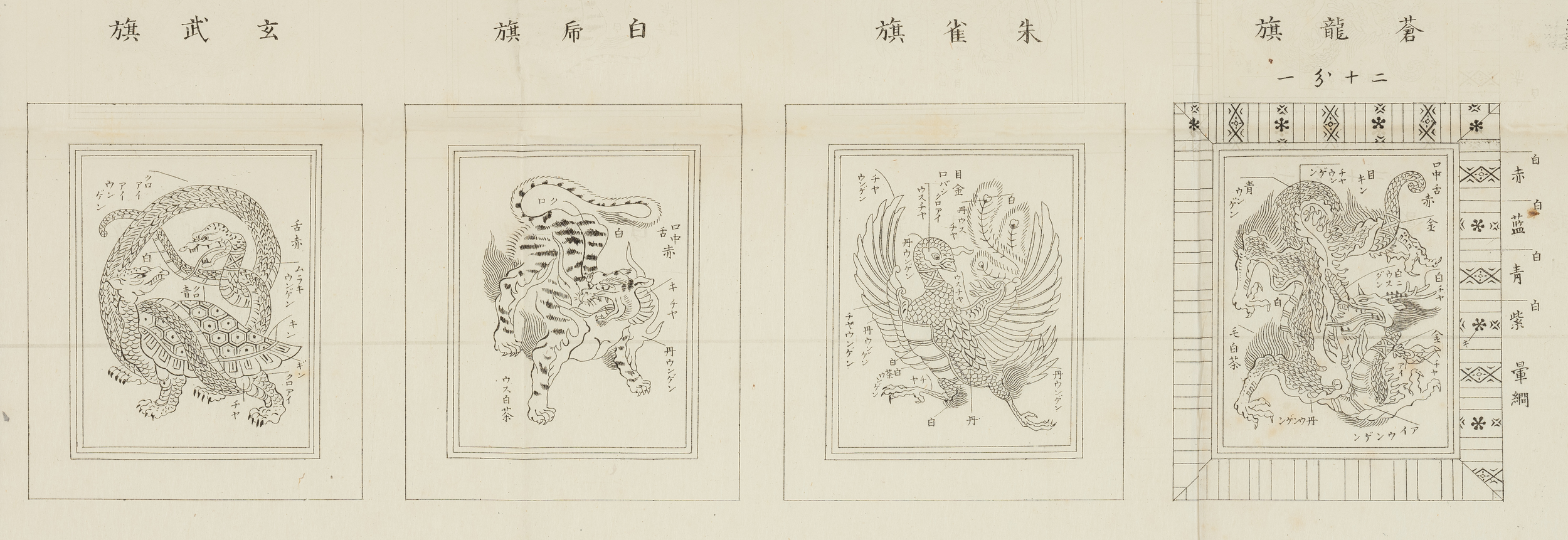
Site Divination in Premodern East Asia
Since ancient times, people across the Chinese cultural sphere have sought out auspicious locations for constructing graves, founding cities, and building houses or other structures. The practices and beliefs connected to determining these ideal sites are generally grouped under the broad label of fengshui or geomancy.
Central to determining the auspiciousness of a site are four guardian deities, which during the first centuries of the Common Era were consolidated as being the Vermilion Sparrow, the Black Turtle-Snake, the Azure Dragon, and the White Tiger. Each of these was paired with a relative direction and, after the invention of the compass, with a corresponding cardinal direction: front (south), back (north), left (east), and right (west). However, the earliest texts remain vague about the form in which these mythical animals were present in the landscape:

“‘If the land has the four configurational forces, qi will follow the eight directions.’ Therefore, in burial, one has on the left the Azure Dragon, on the right the White Tiger, at the front the Vermillion Sparrow, and the back the Dark Warrior. The Dark Warrior will hang his head, the Vermillion Sparrow will soar in dance, the Azure Dragon will creep along, and the White Tiger will tamely bow his head. If the form and configurational force are in opposition to this formulation, then there will be ruin and death.”
— Zangshu (Book of Burial) by Guo Pu (transl. Michael Paton)
Initially, only the shape of natural landscape features like mountains and rivers was considered when determining whether they were suitable representatives of the four guardian deities. By the ninth century at the latest, however, a slightly different tradition of site divination had emerged that also included a man-made element as a requirement for an auspicious site. It is this latter tradition that became the most well-known site divination model in Japan due to its inclusion in the Sakuteiki, the country’s oldest extant treatise on gardens:
“One should plant trees in the four cardinal directions from the residence and thereby evoke the presence of the Four Guardian Gods—so it is written. The flow of water to the east of the house is the Blue Dragon. If there is no water there, then plant nine willow trees instead. The Great Path to the West is the White Tiger. If there is no Great Path, then plant seven catalpas in its place. The pond to the south is the Scarlet Bird. If there is no pond, then plant nine katsura trees there. The hill to the north is the Black Tortoise. If there is no hill there, then plant three cypress trees. Those who follow these rules will create places encompassed by the Four Guardian Gods and be blessed by ascending careers, personal wealth, good health, and long lives.”
— Sakuteiki (transl. Jiro Takei and Marc P. Keane)
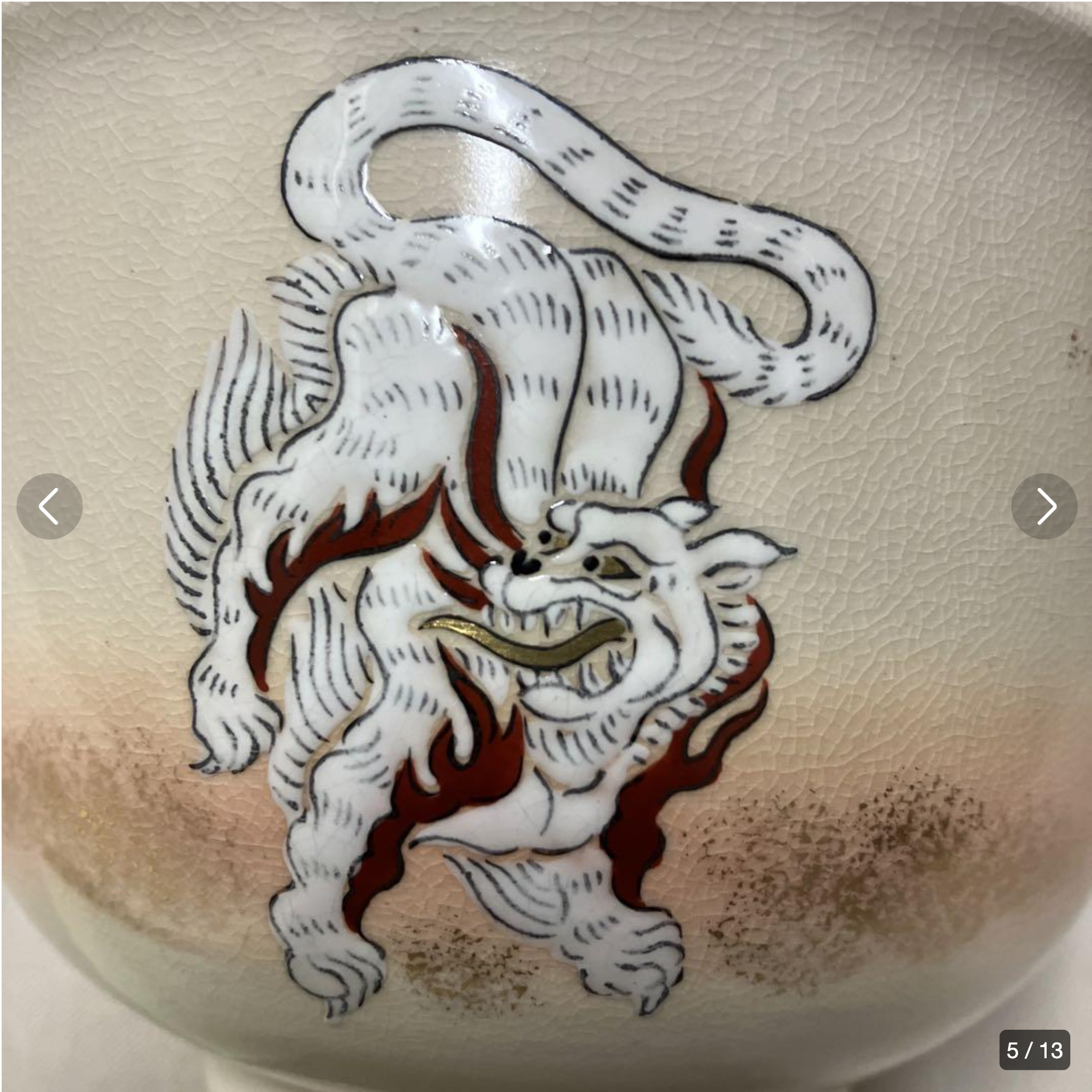
Although it was a divination method for the selection of an ideal site for the construction of a private residence, this model became so influential in Japan that it soon led to a common misconception that continues into the present. Already by medieval times, people mistakenly assumed that this same method, known in Japanese as shijin sōō or ‘correspondence to the four deities,’ had also been used to determine the locations of ancient capitals like Nara, Nagaoka, and Kyoto.
Contemporary Architecture
During the 1990s, a fengshui boom gripped Japan and this had a direct impact on how several major construction projects in Kyoto were designed and presented. In some cases, the fengshui elements stemmed from the architect's own convictions; in others, they were included at the specific request of the clients, or they were a strategic intervention to convince the public that the project’s design was suitable for such a historic city.
Regardless of whether they were part of the initial plan or added later as a justification for the project, fengshui elements thus played a significant role in shaping such notable landmarks as Hara Hiroshi’s Kyoto Station and Isozaki Arata’s Kyoto Concert Hall.
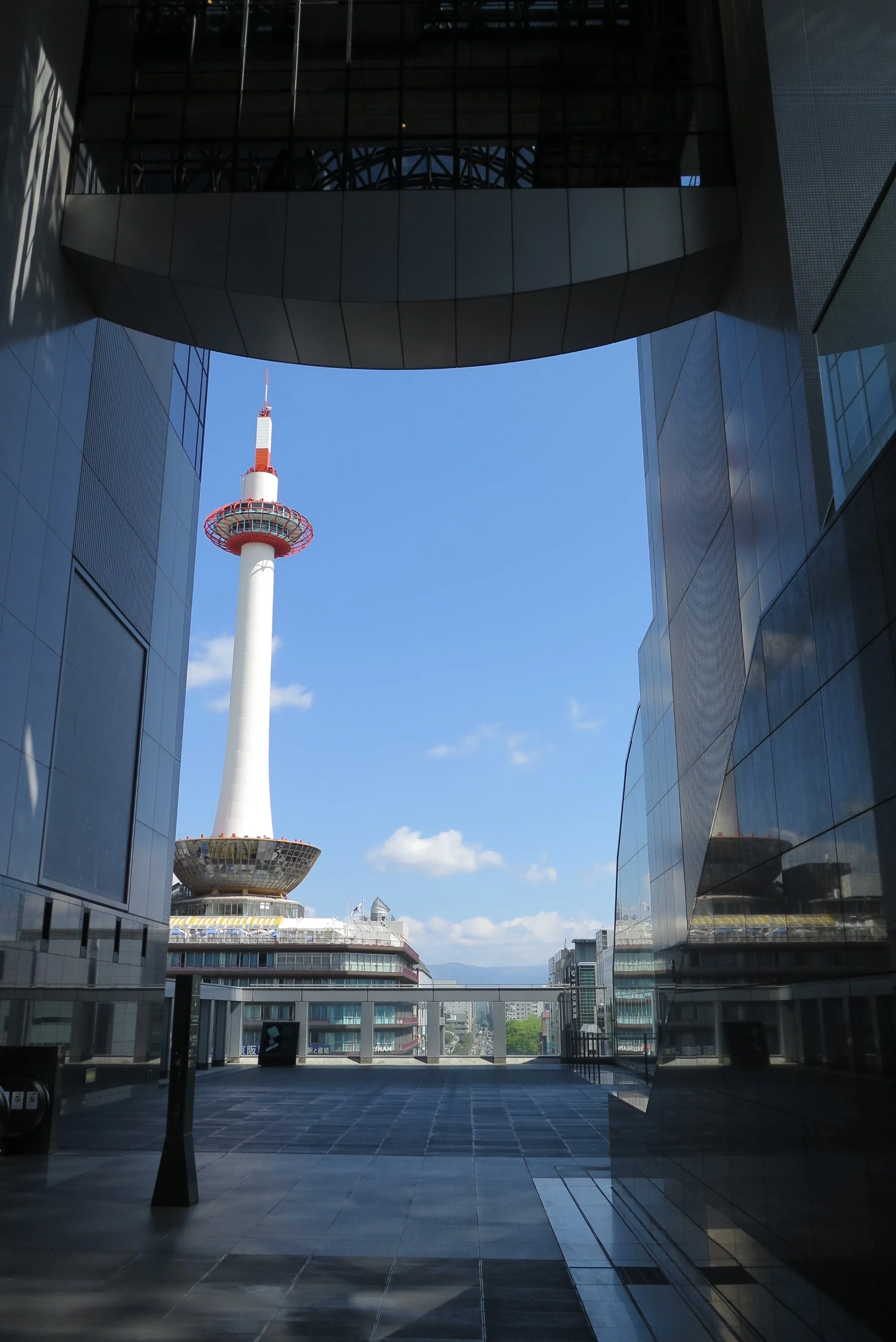
This void in Kyoto Station was designed to allow qi to flow through
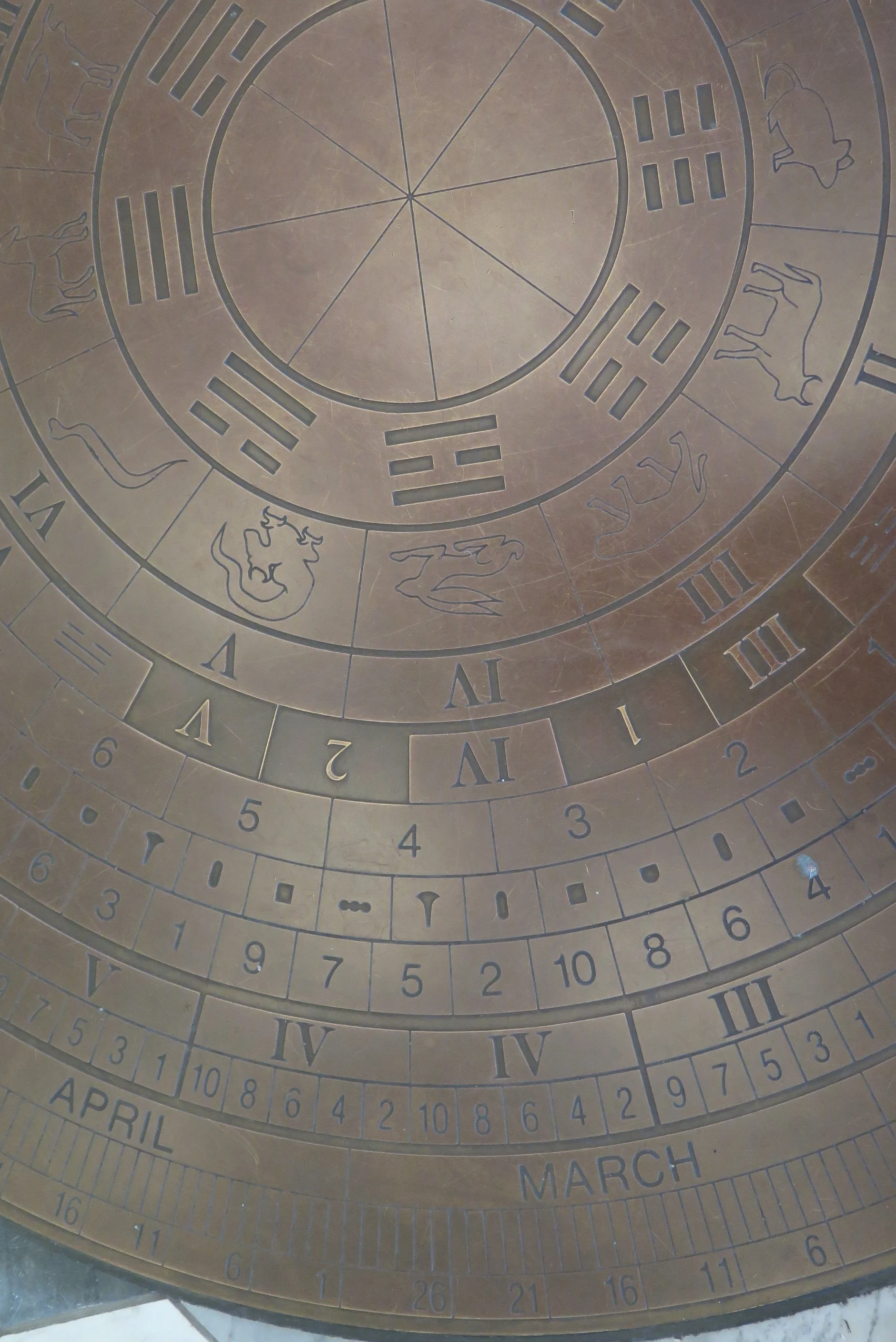
Fengshui compass embedded in the floor of Kyoto Concert Hall
Publications
‘Kyūto no shikichi sentei to fūsui’ 宮都の敷地選定と風水 [The Site Selection Process of Chinese-style Capitals and Fengshui], in Pham Le Huy, ed., Nihon no tojō to higashi ajia 日本の都城と東アジア [Japanese Capital Cities and East Asia] (Hanoi: Vietnam National University, Japan Foundation), 2022, 57–70.
‘Animated City: Life Force, Guardians, and Contemporary Architecture in Kyoto,’ in Fabio Rambelli, ed. Spirits and Animism in Contemporary Japan: The Invisible Empire (London: Bloomsbury, 2019), 81–94.
‘Of Trees and Beasts: Site Selection in Premodern East Asia,’ Journal of Asian Humanities at Kyushu University (JAH-Q) 1 (2016): 1–7.
‘Interroger le paysage: À la recherche des quatre divinités protégeant les capitales japonaises de style chinois,’ in Benoit Jacquet, Philippe Bonnin and Nishida Masatsugu, eds., Dispositifs et notions de la spatialité japonaise (Lausanne: Presses Polytechniques Universitaires Romandes, 2014), 81–100.
‘Feng Shui Symbolism in Japan: The Four Divine Beasts,’ in Florian Reiter, ed., Theory and Reality of Feng Shui in Architecture and Landscape Art (Berlin: Humboldt-Universität zu Berlin, 2013), 35–48.
‘Higashi ajia no shishinjū ni kansuru hikaku kenkyū: Kyūto, jūtaku, jumoku 東アジアの四神獣に関する比較研究:宮都・住宅・樹木 [Comparative Research on the Four Mythical Beasts in East Asia: Capital Cities, Residences, and Trees],’ in Kōkyōsuru kodai III Kokusaiteki Nihon kodaigaku no tenkai 交響する古代III 国際的日本古代学の展開 [The Reverberating Past III: The Development of International Ancient Japanese Studies] (Research Institute for Ancient Japanese Studies, Meiji University, 2013), s.p.
‘The Four Divine Beasts—Asuka Through European Eyes,’ in Kokusai Asukagaku kōenkai hōhokusho 国際飛鳥学講演会報告書 (2012), 25–32.
‘The Four Directional Animals in East Asia: A Comparative Analysis,’ in Florian Reiter, ed., Feng Shui (Kan Yu) and Architecture (Berlin: Humboldt-Universität zu Berlin, 2011), 201–16.
‘Tracing Feng Shui in Ancient Japanese Capitals–Case Study: Nagaoka, Japan’s Forgotten Capital,’ in Michael J. Mak and Albert T. So, eds., Research in Scientific Feng Shui and the Built Environment (Hong Kong: City University of Hong Kong Press, 2009), 151–66.
‘Shijin sōō and the Site Selection Process of Chinese-style Capitals in Japan,’ Conference proceedings CD of the 4th International Conference on Scientific Feng Shui & Built Environment 2009, Sustainability and Operability (Hong Kong: City University of Hong Kong, 2009).
‘Pleasing the Four Gods: Shijin sōō (四神相応), Site Selection and Site Adaptation,’ Cultural Crossroads (CD-rom, ed. Julia Gatley, 2009).
‘Tracing Feng Shui in Ancient Japanese Capital Cities – Case-study: Nagaokakyō,’ Proceedings of the 2nd International Conference on Scientific Feng Shui and Built Environment 2006 (Hong Kong: City University of Hong Kong, 2006).
‘Influence of Chinese Philosophical Thought on the Construction of Nagaokakyō, Japan’s Forgotten Capital,’ International Conference on East Asian Architectural Culture, Kyoto 2006 – Reassessing East Asia in the Light of Urban and Architectural History: Proceedings II (Kyoto: Kyoto University, 2006), 435–44.
Conference Presentations and Invited Lectures
November 21, 2023
‘Trees and Beasts: Auspicious Architecture and Urban Planning in Japan, Past and Present’
SOAS
November 8, 2023
‘Trees and Beasts: Auspicious Architecture and Urban Planning in East Asia, Past and Present’
Ghent University
February 22, 2013
‘東アジアの四神獣に関する比較研究—宮都・住宅・樹木 [Comparative Research on the Four Mythical Beasts in East Asia: Capital Cities, Residences, and Trees]’
国際学術研究会 『国際的日本古代学の展開—交響する古代III』 [International Conference The Reverberating Past III: The Development of International Ancient Japanese Studies]
Meiji University Institute for the Ancient Studies of Japan
November 10, 2012
‘四神獣ーヨーロッパから見た飛鳥 [The Four Mythical Beasts: Asuka as Seen from Europe]’
Meiji University Liberty Academy, Asuka Village
November 6, 2012
‘Site Divination and the (Re)Creation of Cultural Memory’
Humboldt University of Berlin
May 18, 2011
‘Planting Trees and Healing Sites: Geomantic Thought in China, Korea and Japan’
Inaugural Lecture, Kyushu University
November 11, 2010
‘The Four Gods in China and Japan: A Comparative Analysis’
International Symposium on Kanyu (Fengshui) and Architecture, Humboldt University
April 30, 2010
‘Where is the Tiger?: Capital Site Selection in Classical Japan’
Symposium: Nara, City of East Asia: Cosmopolitanism and Localism in Eighth-Century Japan, University of Oregon
December 15, 2009
‘Questioning the Landscape: In Search of the Four Gods Protecting Japan’s Chinese- style Capitals’
Scuola Italiana di Studi sull'Asia Orientale ISEAS and École Française d’Extrême-Orient EFEO (European Consortium for Asian Field Study, ECAF)
Funding
This research is funded by
JSPS / KAKENHI Grant for Young Researchers (A) 若手研究 A (2015–2019)
‘Site Divination Practices in Premodern East Asia’ (grant no. 15H05376)出産・育児復帰者支援 [Support for Women Returning from Maternity and Parental Leave, Kyushu University] (2015–2016)
‘Fengshui-related Practices in Shinto Shrines’平成26年度九州大学教育研究プログラム・研究拠点形成プロジェクト(P&P)[2014 Kyushu University Interdisciplinary Programs in Education and Projects in Research Development] (2014–2015)
‘Shijin Sōō 四神相応 in East Asia: An Urban or Private Site Selection Model?’JSPS / KAKENHI Grant for Young Researchers (A) 若手研究 A (2011–2014)
日本古代・中世の敷地選定 [Site Selection in Ancient and Medieval Japan] (grant no. 23682001)
Japan Foundation Japanese Studies Fellowship (2007–2008, Ritsumeikan University)
Related Event
January 27–29, 2013
2nd IMAP in Japanese Humanities Symposium on Premodern Japanese Culture
“Fengshui in Asia and Beyond: Origins and Diasporas”
Invited speakers: Florian Reiter (Humboldt Universität zu Berlin), Hong-key Yoon (University of Auckland), Michael Paton (University of Sydney), Stephen Field (Trinity University).